United States of America Flag

United States:

Casino News Tournaments

What Makes a Network Tournament Work? The Platipus Case

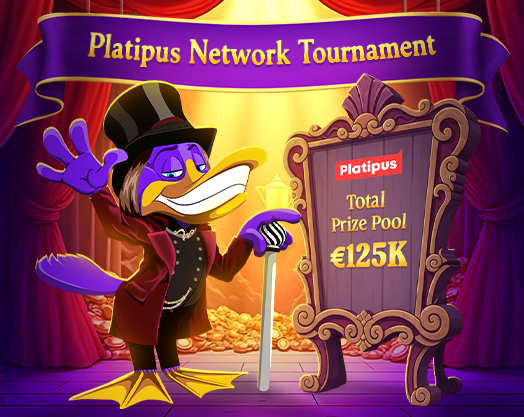
The online casino sector has reached a phase where content supply, bonus mechanics, and promotional formats are no longer scarce. Instead, the market is defined by saturation, marginal differences in user acquisition costs, and a gradual shift from short-term incentives toward formats that support longer player cycles. Within this context, network tournaments have moved from being experimental marketing tools to becoming standardized operational instruments. The Platipus Network Tournament Series, scheduled to run throughout 2026 with a cumulative prize pool of €125,000, offers a useful case study for examining how tournament-based mechanics align with current industry benchmarks and why operators may consider participation not as a branding exercise, but as a calculated structural decision.

platipus tournament photo

29.12.2025

Updated

tournament icon

When Online Casino Tournaments Stop Being Campaigns and Start Becoming Systems

The online casino industry has reached a point where innovation is less about novelty and more about structure. Game portfolios have expanded, acquisition channels have matured, and regulatory pressure has reshaped how incentives are designed and deployed. In this environment, promotional mechanics that once served as short-term traffic drivers are increasingly evaluated as long-term operational systems. Network tournaments fall squarely into this category.

The Platipus Network Tournament Series, scheduled to run throughout 2026 with a cumulative prize pool of €125,000 across five stages, arrives at a moment when the industry is quietly reassessing what makes a tournament effective. Not in terms of visibility or headline value, but in terms of alignment with operator economics, player behavior, and platform sustainability.

tournament-shield

The Maturity Phase of Network Tournaments

To understand the significance of the Platipus Network Tournament, it is necessary to place it within the broader evolution of tournament mechanics in online casinos.

Early network tournaments were often improvised extensions of bonus logic. They tended to concentrate rewards at the top of the leaderboard, favored high turnover strategies, and relied heavily on short timeframes to generate urgency. While these formats produced visible spikes in activity, they also introduced volatility in player behavior and operator costs.

As the market matured, several structural weaknesses became evident. Concentrated prize pools reduced engagement depth, turnover-based scoring encouraged excessive wagering, and one-off tournaments struggled to build continuity. By the mid-2020s, many operators began shifting toward tournament models that emphasized predictability, accessibility, and repetition.

The Platipus Network Tournament reflects this later stage of development. It does not attempt to reinvent the concept, but rather reorganizes its components to address the limitations observed in earlier models.

cash prize

Prize Pool Architecture as a Strategic Signal

The total prize pool of €125,000, distributed evenly across five tournament stages of €25,000 each, immediately signals a departure from the “single peak” model that still dominates parts of the market. Rather than concentrating attention and risk into a single high-impact event, Platipus opts for a distributed calendar spanning most of the year.

This structure has two important implications. First, it allows operators to integrate the tournament into their promotional planning without disrupting other campaigns. Second, it reframes the tournament as a recurring engagement mechanism rather than a one-time attraction.

Equally significant is the decision to reward 150 leaderboard positions per stage. In many network tournaments, the number of paid positions remains capped at 50 or fewer, even when prize pools are comparable. This concentration tends to create a competitive hierarchy that stabilizes quickly, often discouraging participation among players who recognize early that they are unlikely to reach the upper tiers.

By contrast, the Platipus distribution extends material incentives well beyond the top segment. While the top prize of €5,000 remains meaningful, it represents only a fifth of the total stage pool. The remaining funds are distributed gradually, ensuring that a broad spectrum of players retains a rational incentive to remain active throughout the tournament window.

Comparison with Prevailing Market Standards

Structural ElementPlatipus Network TournamentTypical Market Standard
Prize pool per event€25,000€20,000–€30,000
Number of eventsFive recurring stagesOne or two isolated events
Paid leaderboard positions15050–100
Share of pool to first place20%25–35%
Scoring modelHybrid (wins and multipliers)Turnover or wins only
Minimum bet requirement€0.20€0.20–€0.50
Integration modelIn-house provider toolMixed, often third-party

What emerges from this comparison is not a single standout metric, but a pattern of decisions that collectively shift the tournament above the median market approach. Each element individually aligns with standard expectations, but their combined effect creates a structure that is more balanced, more inclusive, and more predictable.

score

Scoring Logic and Behavioral Implications

One of the most analytically interesting aspects of the Platipus Network Tournament is its scoring system. Rather than relying exclusively on turnover or raw win amounts, the tournament assigns points based on both multipliers and absolute wins, converted into euros.

This hybrid model alters player incentives in subtle but important ways. Turnover-only systems tend to reward volume regardless of outcome, often favoring players willing to accept higher variance or loss tolerance. Win-only systems, on the other hand, can disproportionately reward isolated high outcomes, reducing the relevance of sustained play.

By combining these elements, Platipus introduces a form of equilibrium. Players are rewarded for meaningful wins, but those wins are contextualized through multipliers rather than raw stake escalation. The result is a scoring environment where aggressive and conservative strategies coexist without one structurally overwhelming the other.

For operators, this has measurable value. It reduces the likelihood of extreme betting behavior driven solely by leaderboard optimization, thereby aligning more closely with responsible gambling frameworks and regulatory scrutiny.

accessible

Accessibility Without Dilution

The minimum bet requirement of €0.20 per spin places the Platipus tournament at the lower end of market thresholds, without trivializing participation. The requirement is low enough to include casual players, yet high enough to maintain relevance for leaderboard progression.

In practical terms, this creates a tournament environment where entry is not a decision, but continuation is. Players do not need to opt in through a separate mechanic or commit upfront resources. Participation emerges organically from regular play on the selected titles.

This design choice reflects a broader industry trend away from explicit opt-in mechanics toward implicit engagement structures. The Platipus tournament exemplifies this shift, embedding competition into gameplay rather than layering it on top.

online casino games

Game Selection and Controlled Exposure

Each tournament stage is anchored to a specific Platipus title, including Santa's Bag, Pirate's Legacy, Catch the Leprechaun, Jackpot Lab, and Pirate's Map, supported by a rotating selection of feature games.

This approach contrasts with open-catalog tournaments, which often include dozens or even hundreds of titles. While open formats maximize theoretical reach, they tend to diffuse player focus and complicate performance analysis.

By limiting and rotating the game set, Platipus enables operators to observe clearer correlations between tournament activity and individual game performance. This makes the tournament not only an engagement tool, but also a diagnostic instrument for content evaluation.

leaderboard

Leaderboard Mechanics and Trust Infrastructure

Leaderboard credibility remains one of the most underestimated variables in tournament success. Update frequency, calculation transparency, and dispute resolution all contribute to player trust, which in turn affects participation depth.

The Platipus leaderboard updates automatically every minute under normal conditions, with a clearly defined contingency window in exceptional circumstances. This cadence sits above the industry average, where update intervals of five to fifteen minutes remain common.

More importantly, the calculation logic is explicit and standardized. Points are calculated in euros, with currency conversions handled at the operator level using internal exchange rates. This clarity reduces ambiguity and minimizes friction in multi-currency environments.

philosopher icon

A Philosophical Lens on Balance and Sustainability

The Greek philosopher Aristotle argued that stability lies not in extremes but in balance. While philosophical analogies should be used cautiously in commercial analysis, the principle is relevant here.

The Platipus Network Tournament avoids extremes in prize concentration, entry thresholds, scoring incentives, and calendar intensity. Instead, it occupies a measured position across each dimension. This balance does not guarantee exceptional outcomes, but it significantly reduces structural risk.

In an industry increasingly shaped by regulation, cost discipline, and long-term player value, such a balance is not merely desirable but necessary.

casinologia icon

Final Assessment: Above the Market Standard by Design

When evaluated holistically, the Platipus Network Tournament stands above prevailing market standards not because it introduces radical innovation, but because it aligns multiple established best practices into a coherent system.

Its prize distribution encourages sustained participation rather than early attrition. Its scoring logic moderates behavioral extremes. Its accessibility supports broad engagement without undermining value. Its calendar design favors continuity over intensity.

For online casinos assessing whether to participate, the question is not whether the tournament will transform performance overnight. The more relevant question is whether it offers a structurally sound, low-friction way to enhance engagement within an already complex ecosystem.
On that measure, the Platipus Network Tournament exceeds expectations. It reflects a mature understanding of how tournaments function in a market where stability increasingly matters as much as growth.

Table of Contents